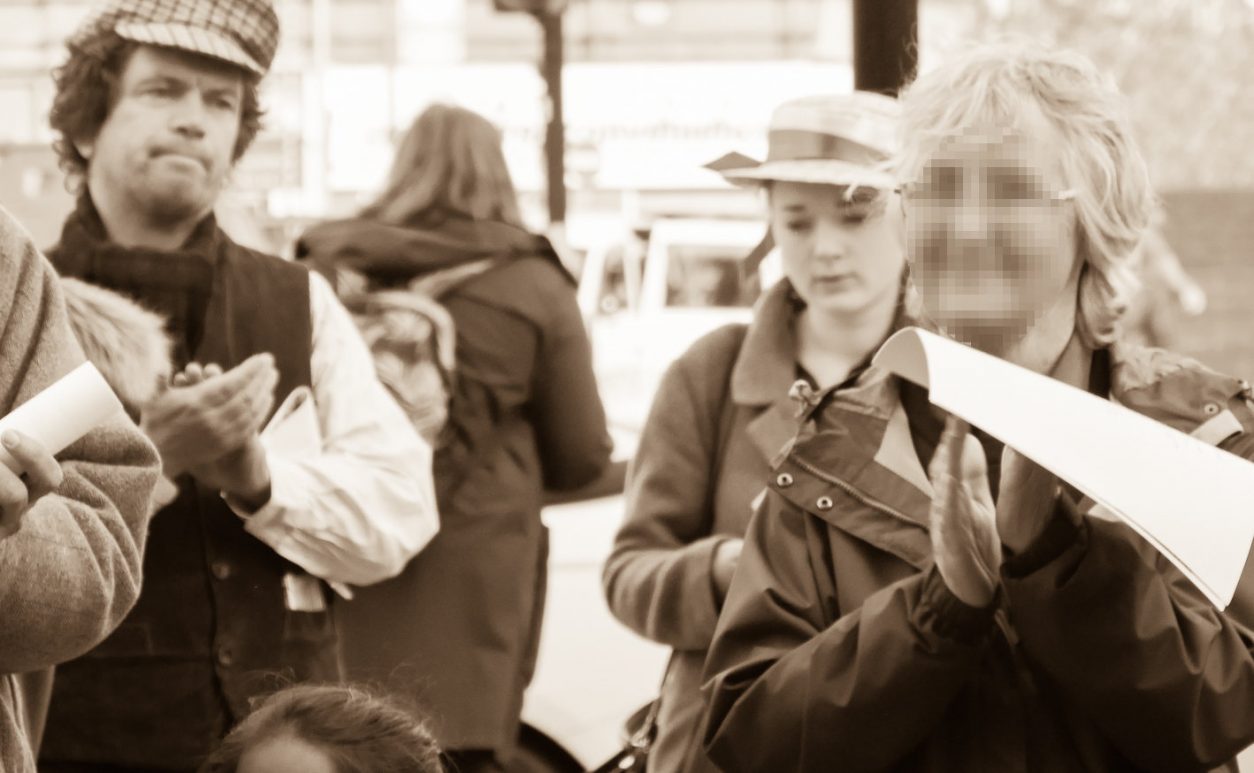
Performed in Birmingham on October 7th 2018, in the Centenary Year of the first women achieving the vote
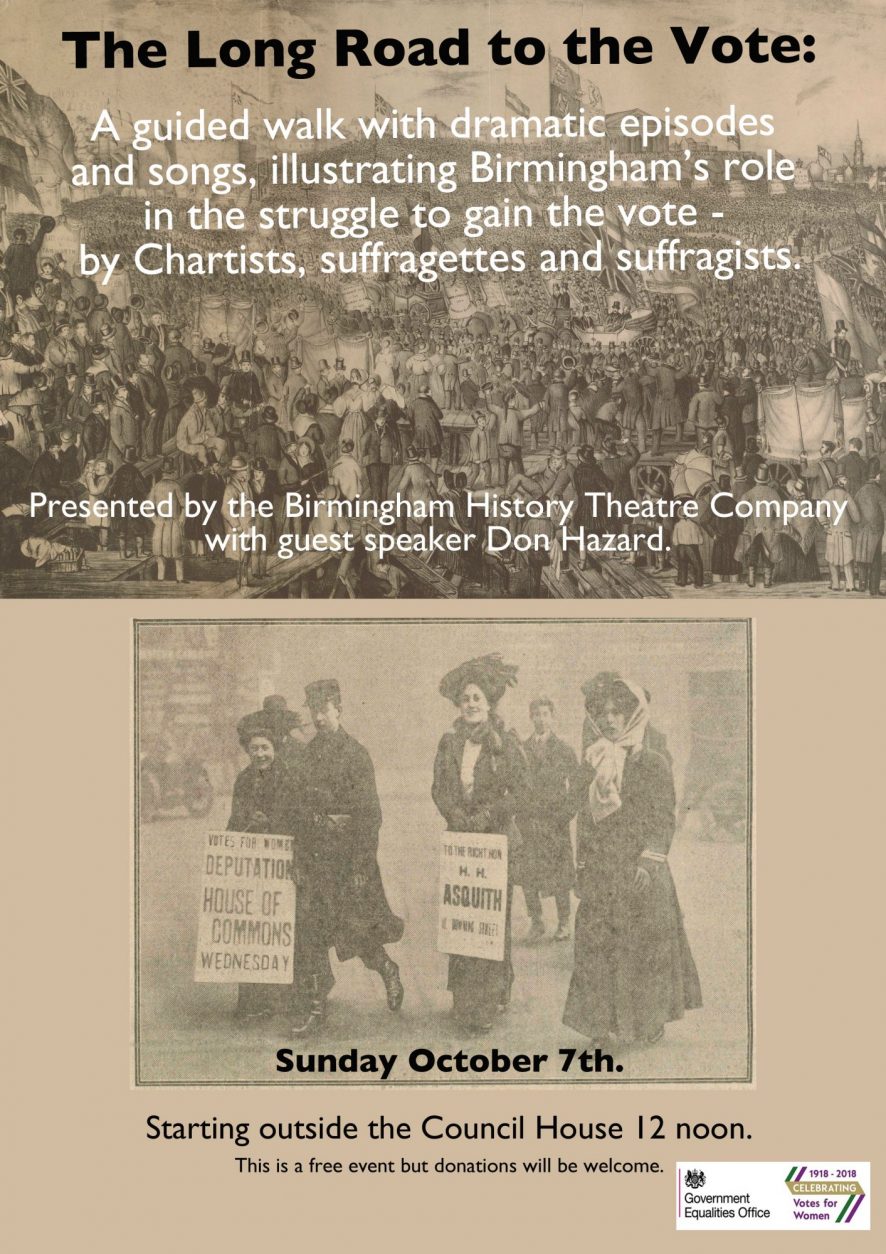
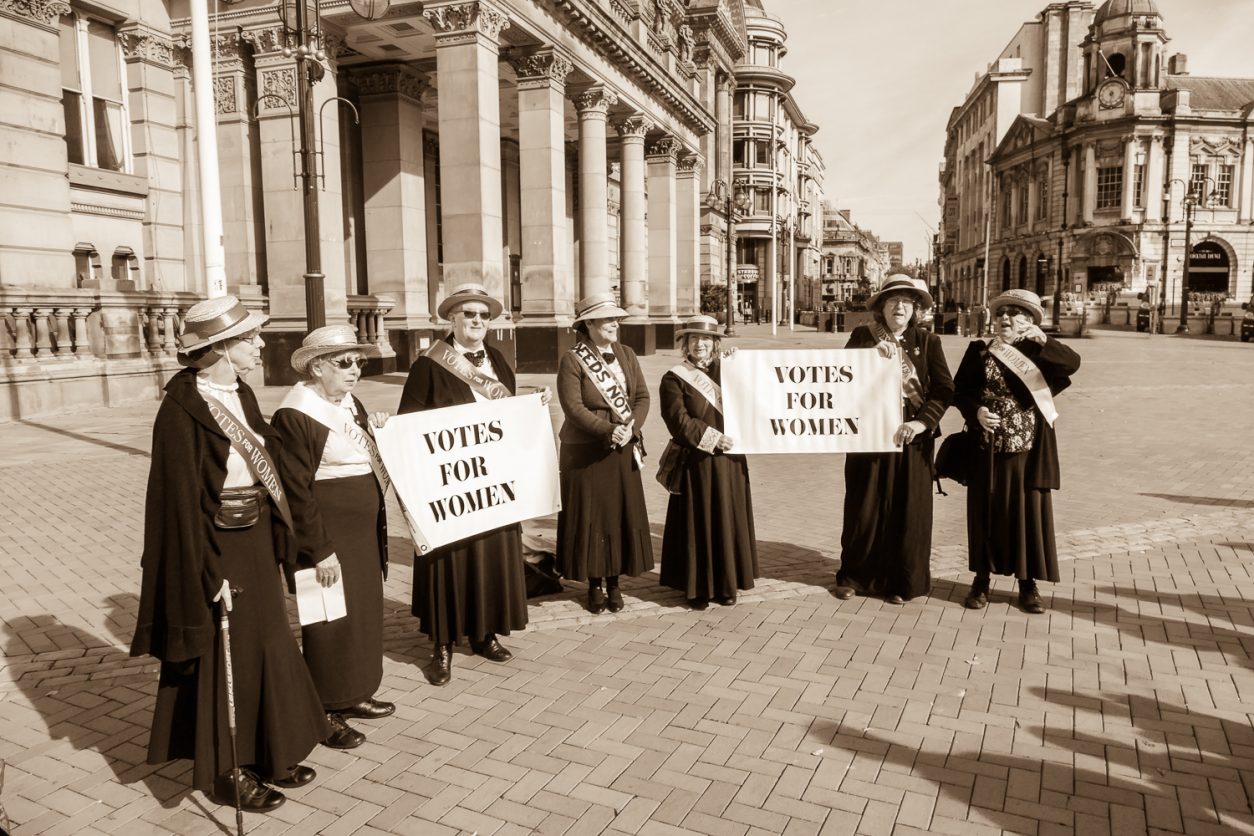
The dramatic trail was led by Don Hazzard, one of Birmingham’s foremost historians. He started the trail by explaining that the walk was to illuminate two aspects of Birmingham’s history; the Chartist Struggle and the campaign by the Birmingham Women’s Suffrage movement and the Suffragettes.
one: Outside Birmingham Museum and Art Gallery ~ June 1914
We witnessed Bertha Ryland emerging from the building , having attacked a painting.
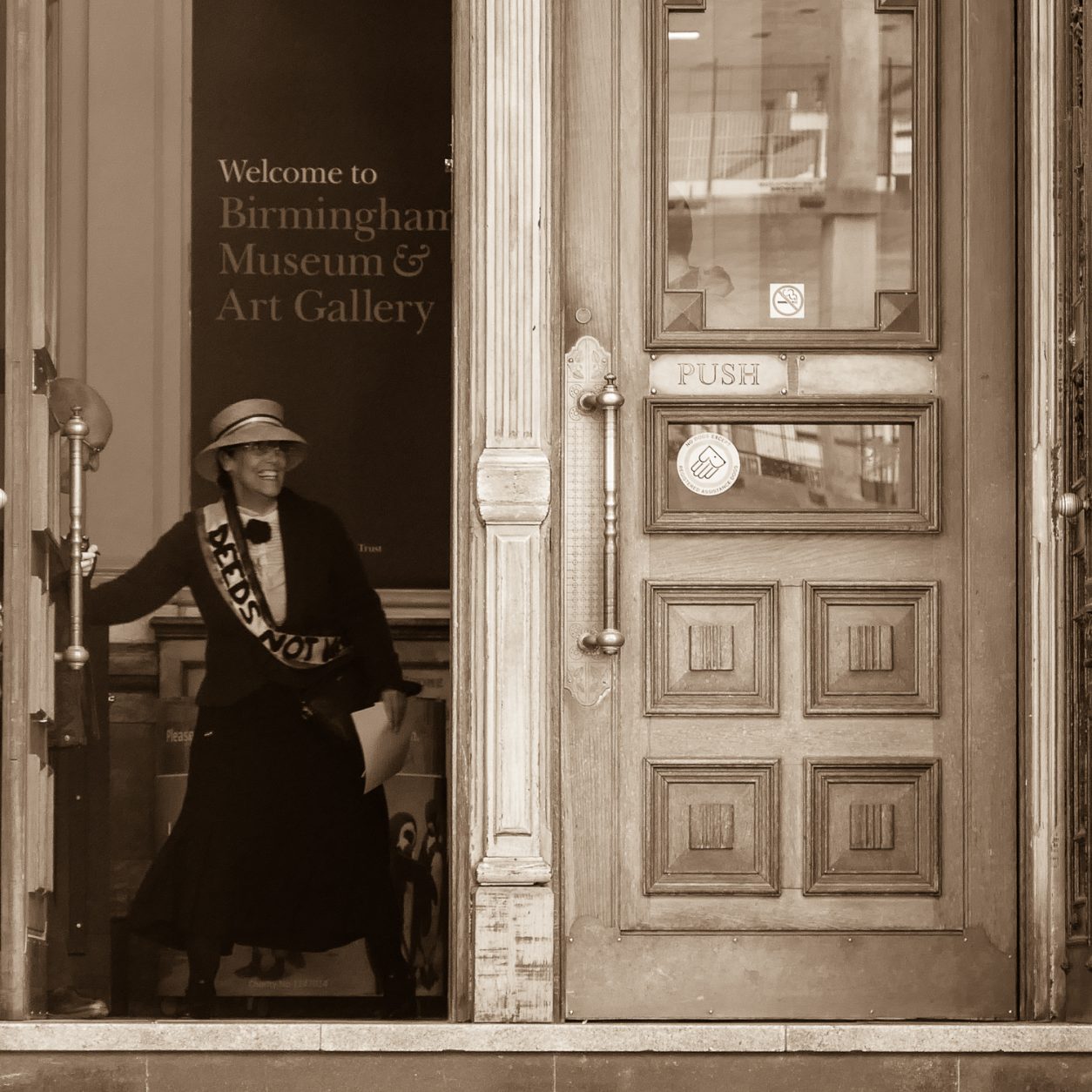
She said: “ I attack this work of art deliberately as a protest against the Government’s criminal injustice in denying women the vote and also against the Government’s brutal injustice in imprisoning, forcibly feeding and drugging Suffragist militants, while allowing Ulster militants to go free”.
The crowd sang:
“ Oh Dear What can the matter be? Women are wanting the vote Women have husbands, they are protected, Women have sons by whom they’re directed, Women have fathers — they’re not neglected, Why are they wanting to vote?”
two: Easy Row: Site of the Birmingham Women’s Suffrage Society Offices ~ July 1913
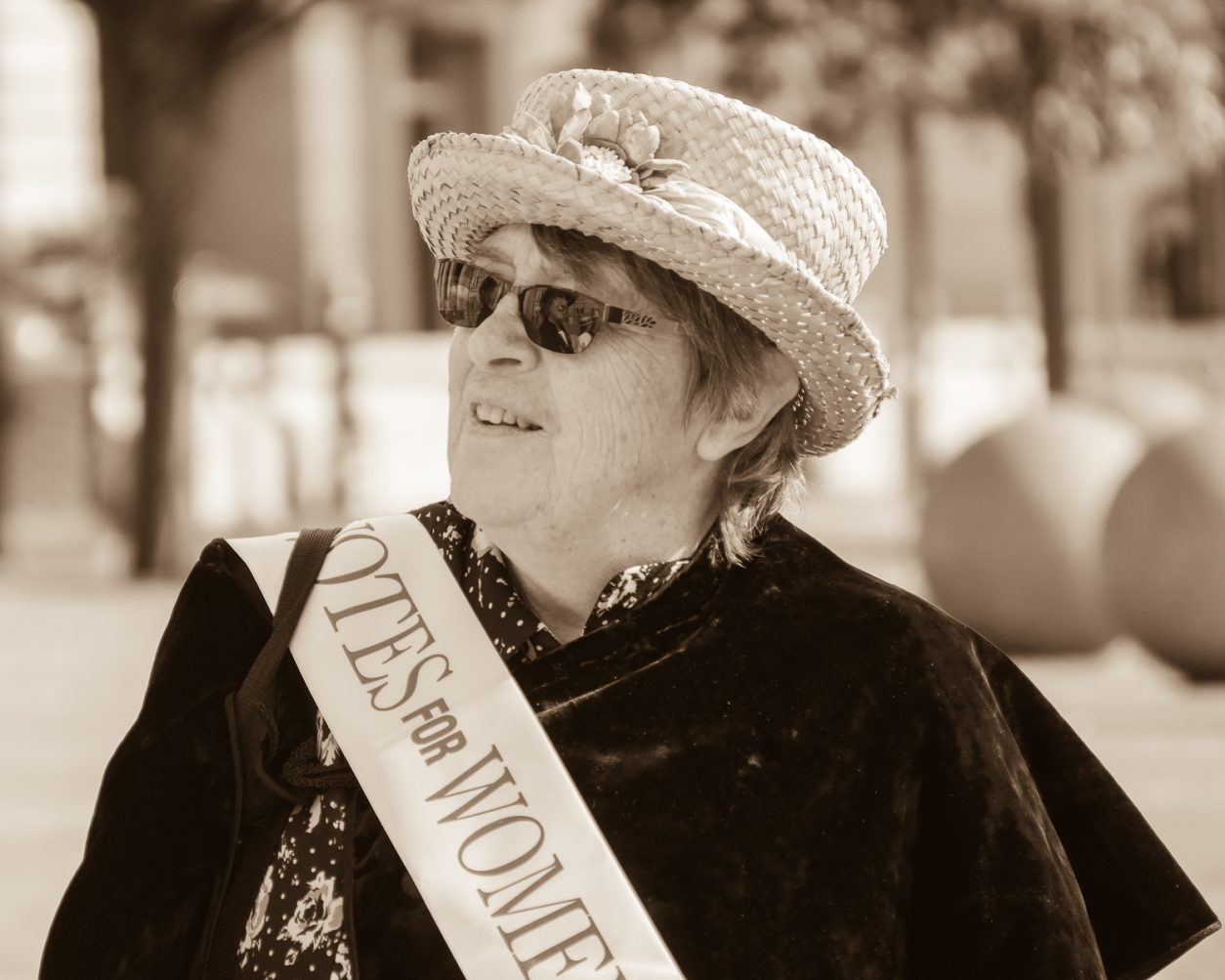
Here we met Catherine Osler who encouraged us to join the National Pilgrimage for Women’s Suffrage which was to culminate in a mass meeting in Hyde Park in London.
three: Site of Bingley Hall ~ September 1909
Three Suffragettes planned their tactics for attacking the Prime Minister, Asquith, when he came to a public meeting at Bingley Hall. On the agenda- throwing slates from the roof, breaking windows with stones cast from a house across the road and attacking Asquith’s train at New St Station.
As a result of their actions, five women were arrested. They went on hunger strike and were then subjected to force feeding.
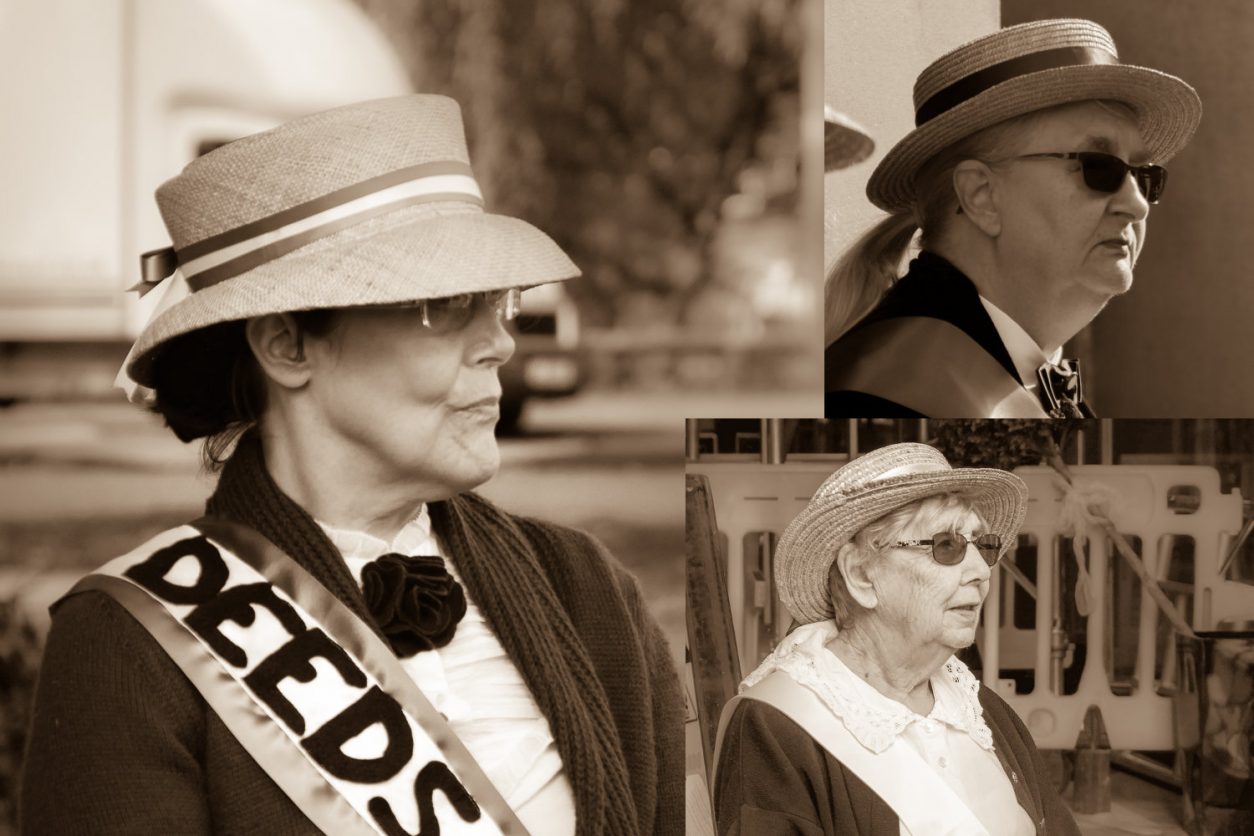
The crowd cheered them on by singing “The March of the Women”
“Life, strife—those two are one, Naught can ye win but by faith and daring. On, on—that ye have done But for the work of today preparing. Firm in reliance, laugh a defiance, (Laugh in hope, for sure is the end) March, march—many as one, Shoulder to shoulder and friend to friend
four: Newhall Street ~ 1832
Gathering of the Unions, site of mass outdoor Birmingham Political Union meetings, including the most famous rally of 7 May 1832 with an estimated 100,000 to 200,000 attendance of Political Unions, who travelled from all parts of the Midlands and further afield, in support of the Reform Bill.
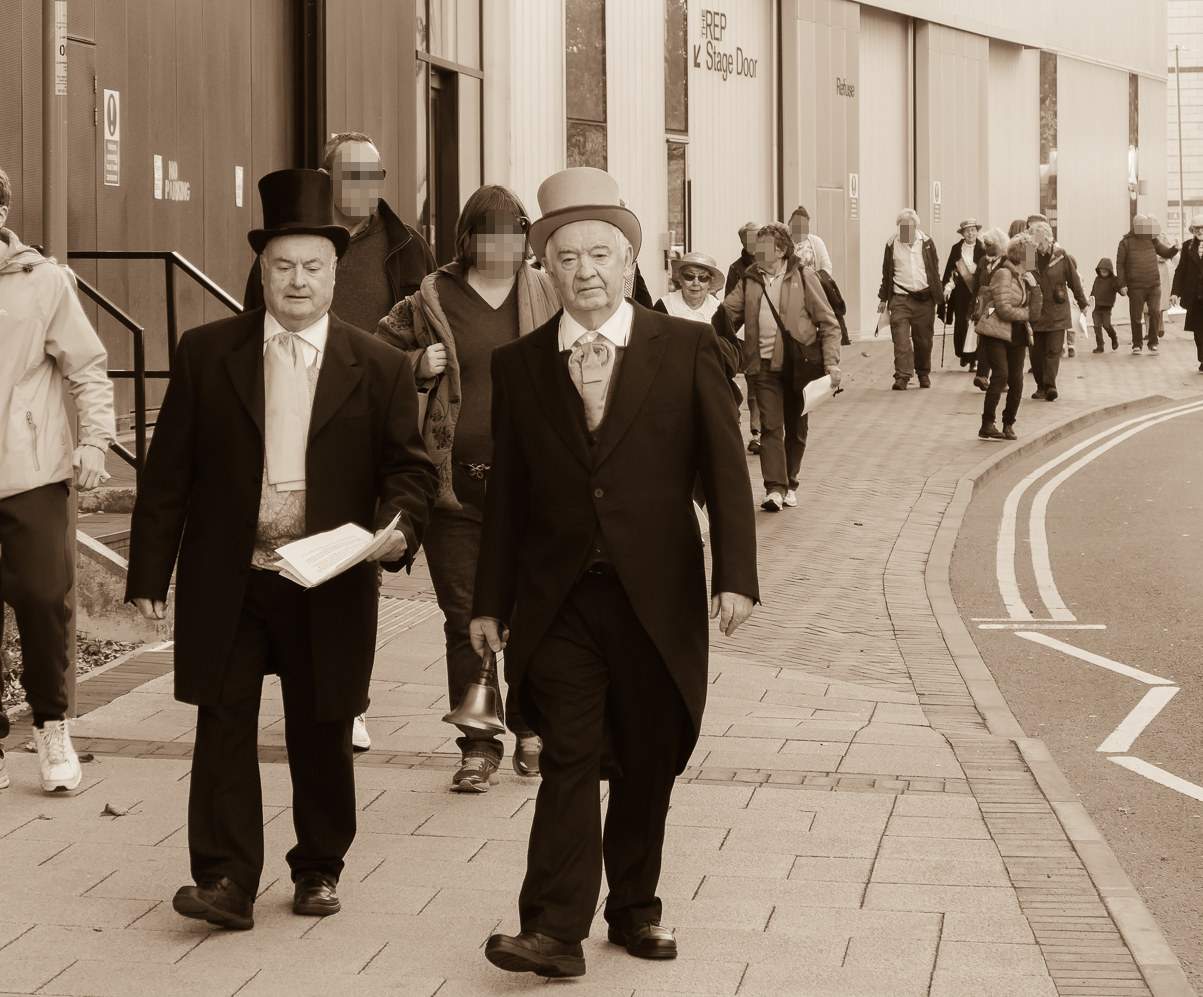
The Chartist Anthem
“A hundred years, a thousand years, We’re marching on the road The going isn’t easy yet, we’ve got a heavy load, Oh we’ve got a heavy load”
Attwood’s speech
“My dear friends and fellow countrymen I thank you most sincerely for the immense, glorious, and magnificent assemblage which you now present in the hour of your country’s need.
The enemies of the liberties of their country have spoken of indifference in the public mind towards the great cause of reform – how are they answered by the people of the midland counties?
We have had but to stamp upon the earth and instantly a hundred thousand brave men, besides the beautiful women I see before me, present themselves, determined to see their country righted.”
five: New Jerusalem Chapel, New Hall St ~ 1864
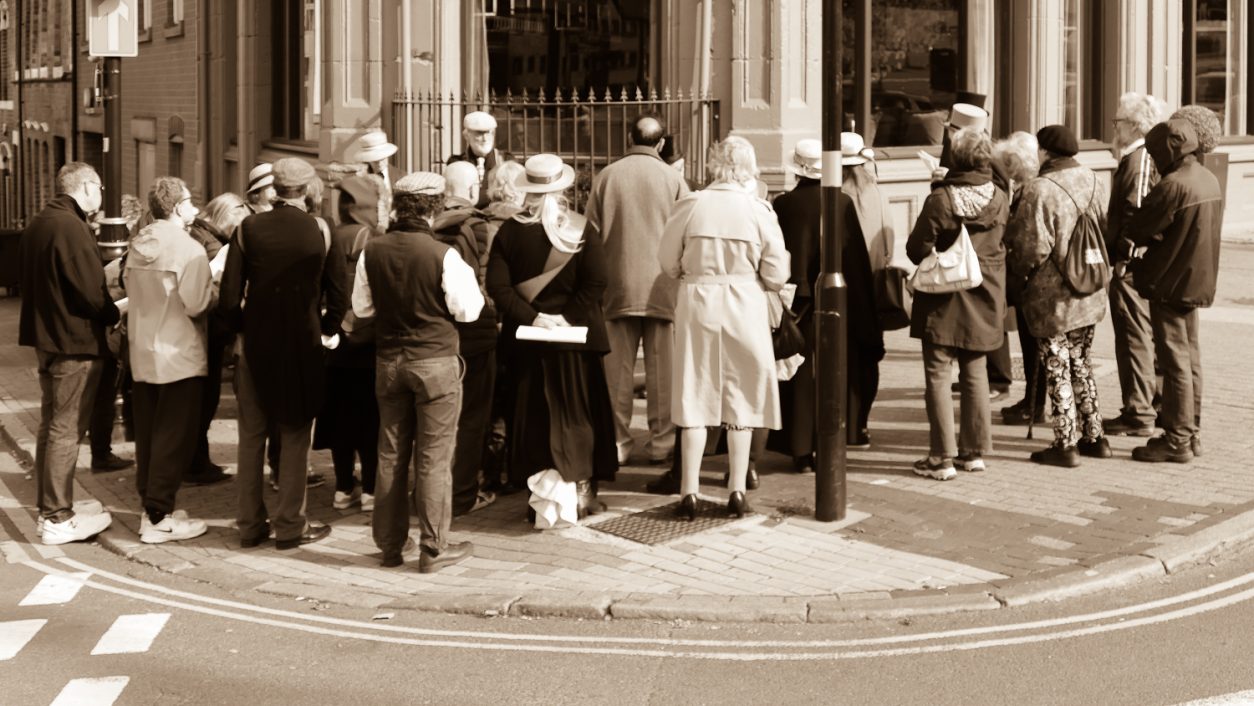
This was a Chartist Christian Church, the only one which survived in England for any length of time. Their pastor, a Baptist minister Arthur O’Neill, was a prominent and influential radical figure in Birmingham from 1840 until his death on 1896.
six: At St Philip’s Cathedral ~ 1864
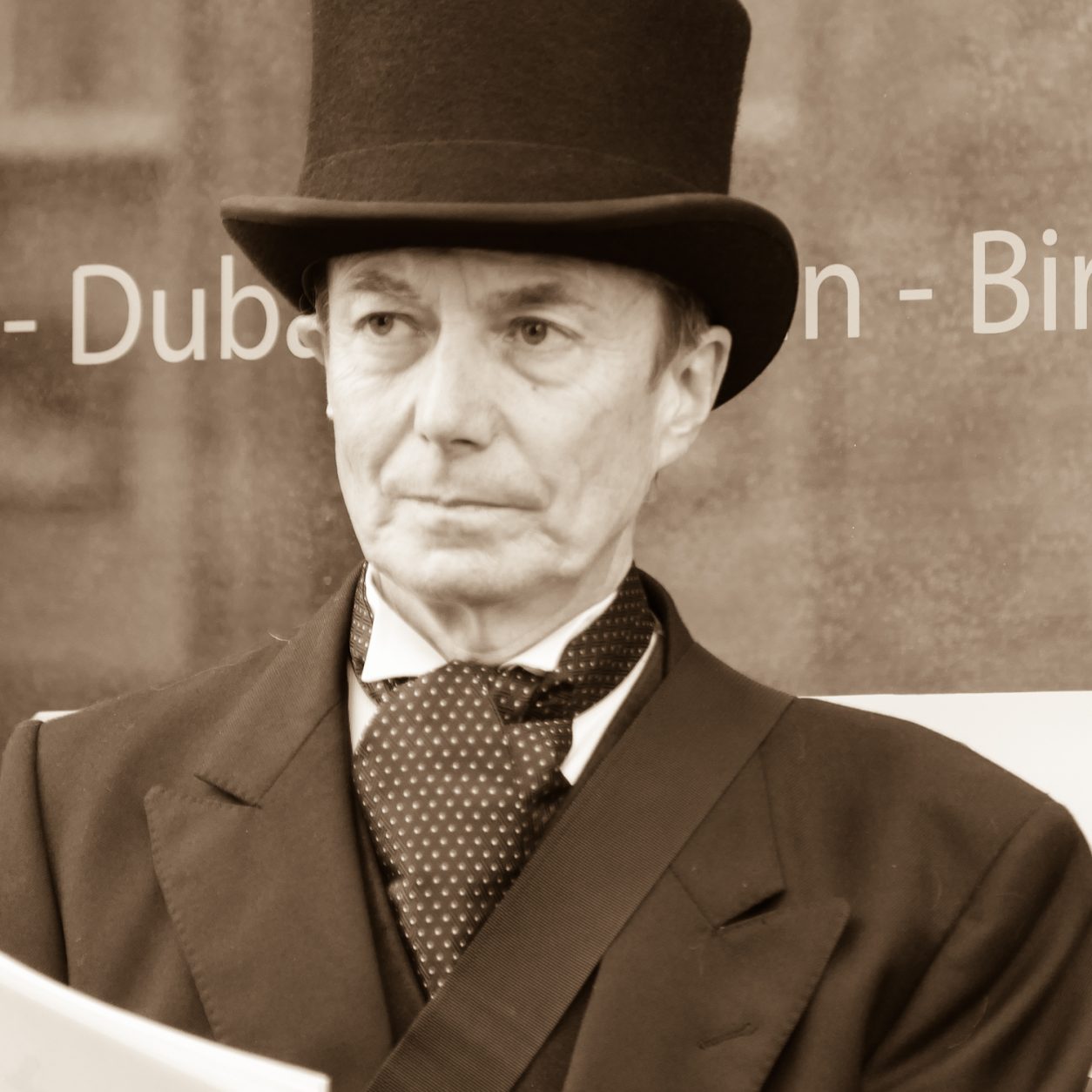
John Bright MP for Birmingham
for 32 years from 1857
He was a leader in the campaign to achieve the Second Reform Bill of 1867 which gave most working men the vote.
Here he gave an inspirational and dramatic speech to the gathered crowd.
seven: At St Philip’s Cathedral ~ 1908
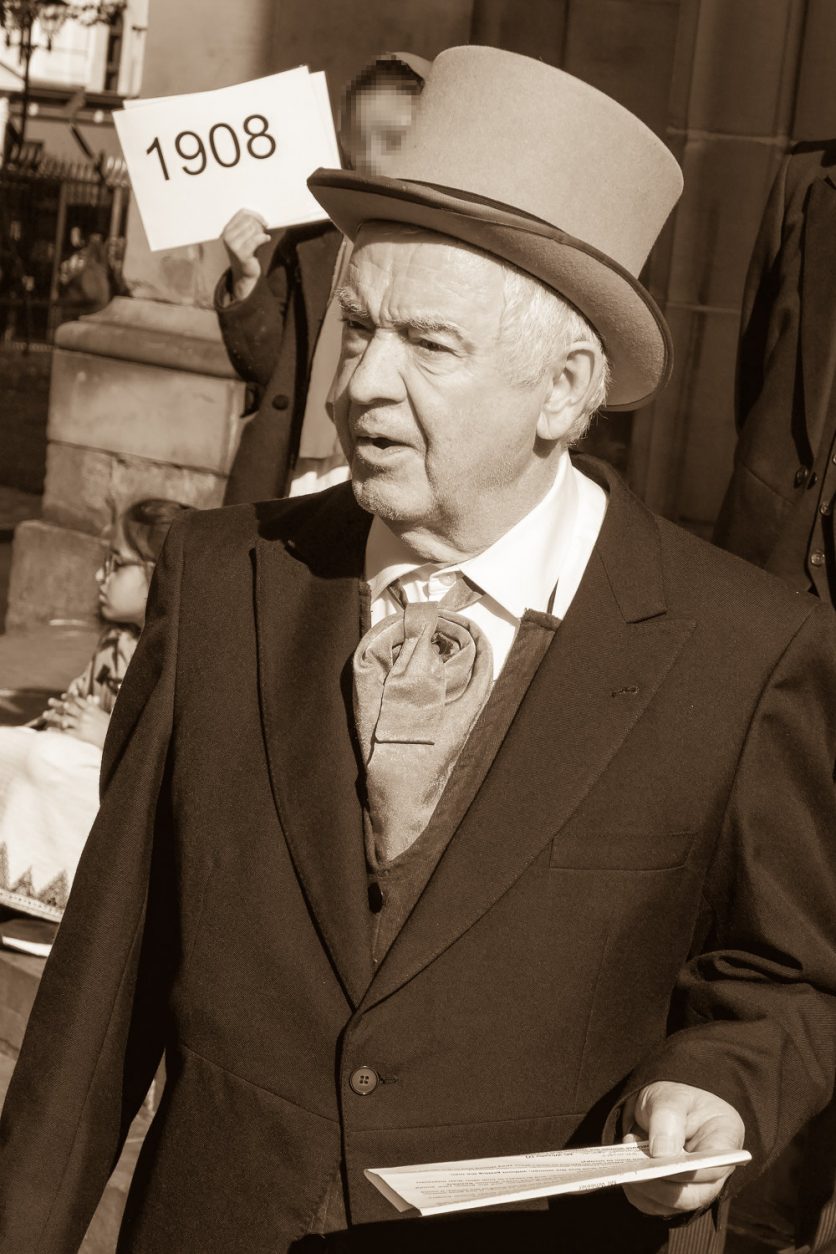
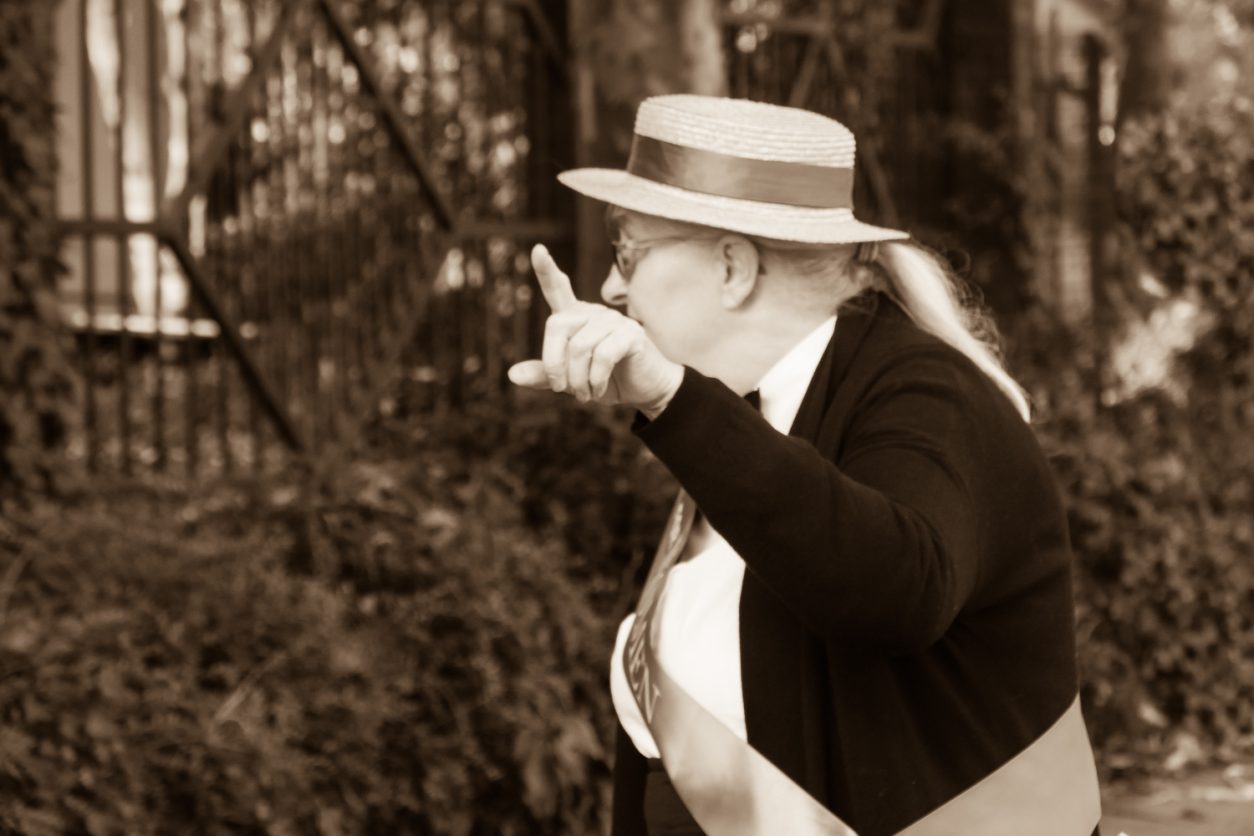
Aston Manor Parliament provided a chance for both supporter and opposers of Women’s Suffrage to have their say.
Hilda Burkitt argued strongly and effectively.
eight: At St Philip’s Cathedral ~ 1914
Suffragettes in action again- daubing painted slogans all over the interior.
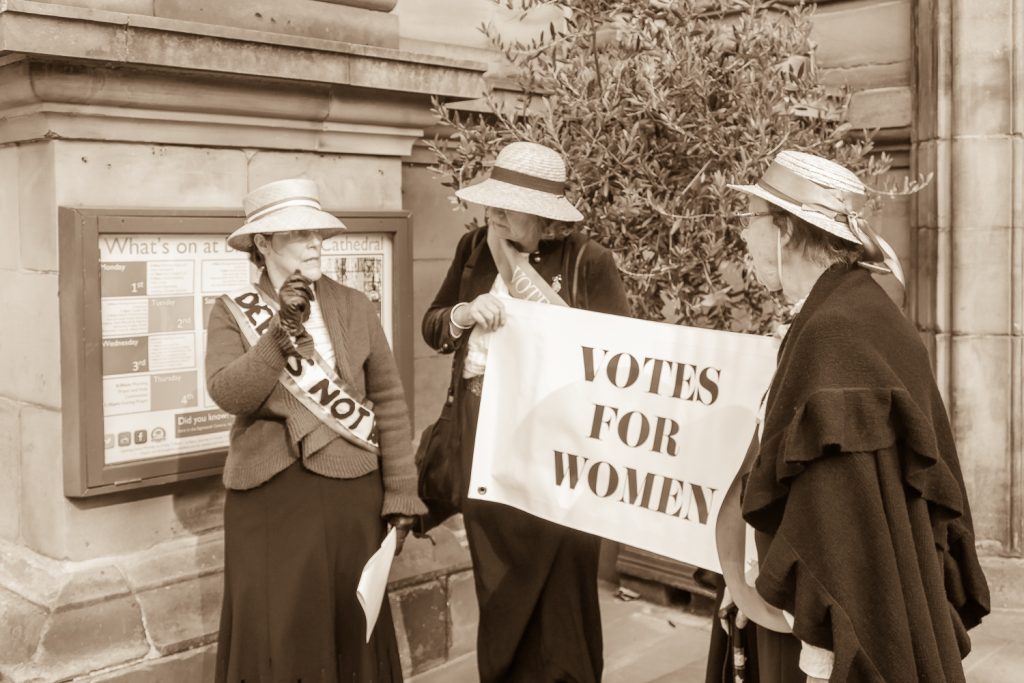
“Onward Sisters, Onward”
“Raise the standard boldly,
In the morning sun;
‘Gainst a great injustice,
See the fight begun!”
nine: Near the Bull Ring ~ 1839

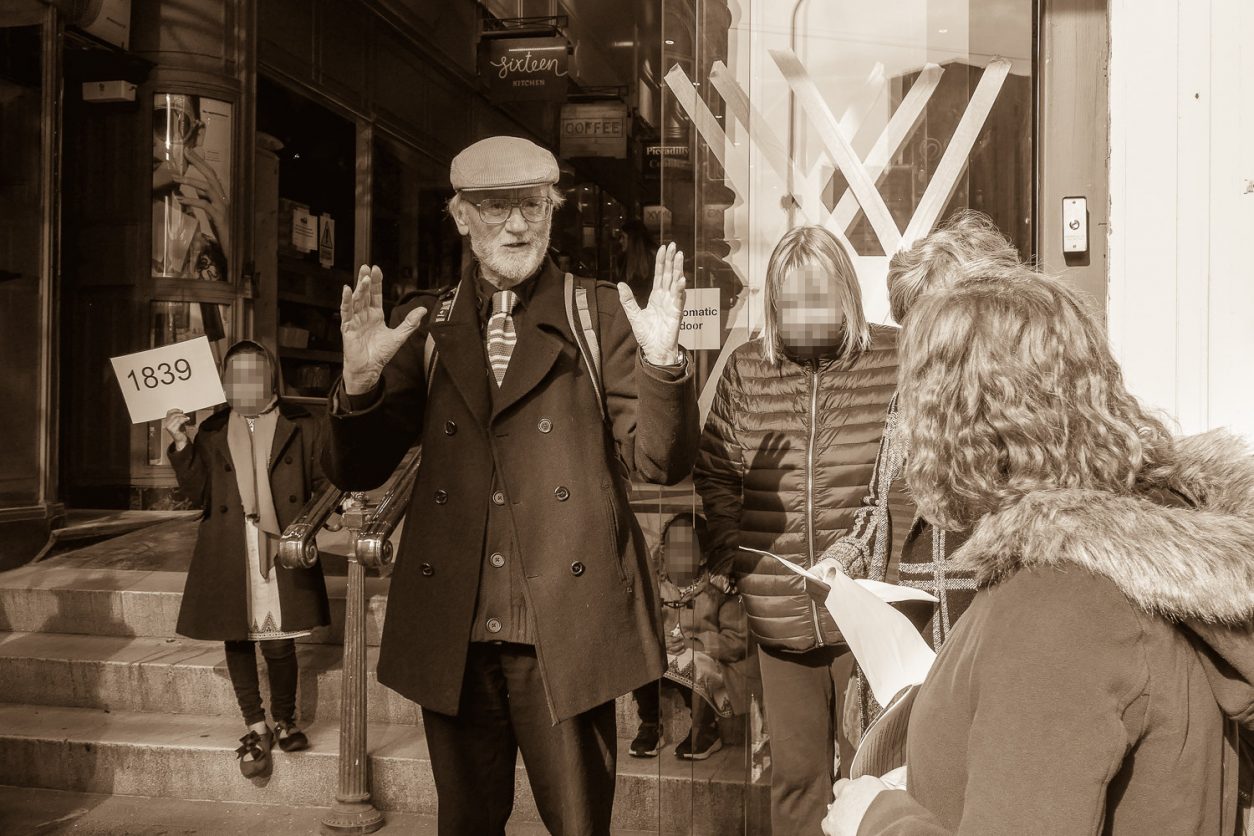
The Bull Ring was the favoured meeting place for Chartists during the summer of 1839 agitating for Parliamentary Reform.
There were several episodes of tension between the police and agitators, which erupted into violence, including the Bull Ring Riots of July 1839
ten: New St Station… en route to Northfield
At this stage of the drama trail, we overheard the Suffragettes debating whether to attack Kings Norton Old School or Northfield Library!
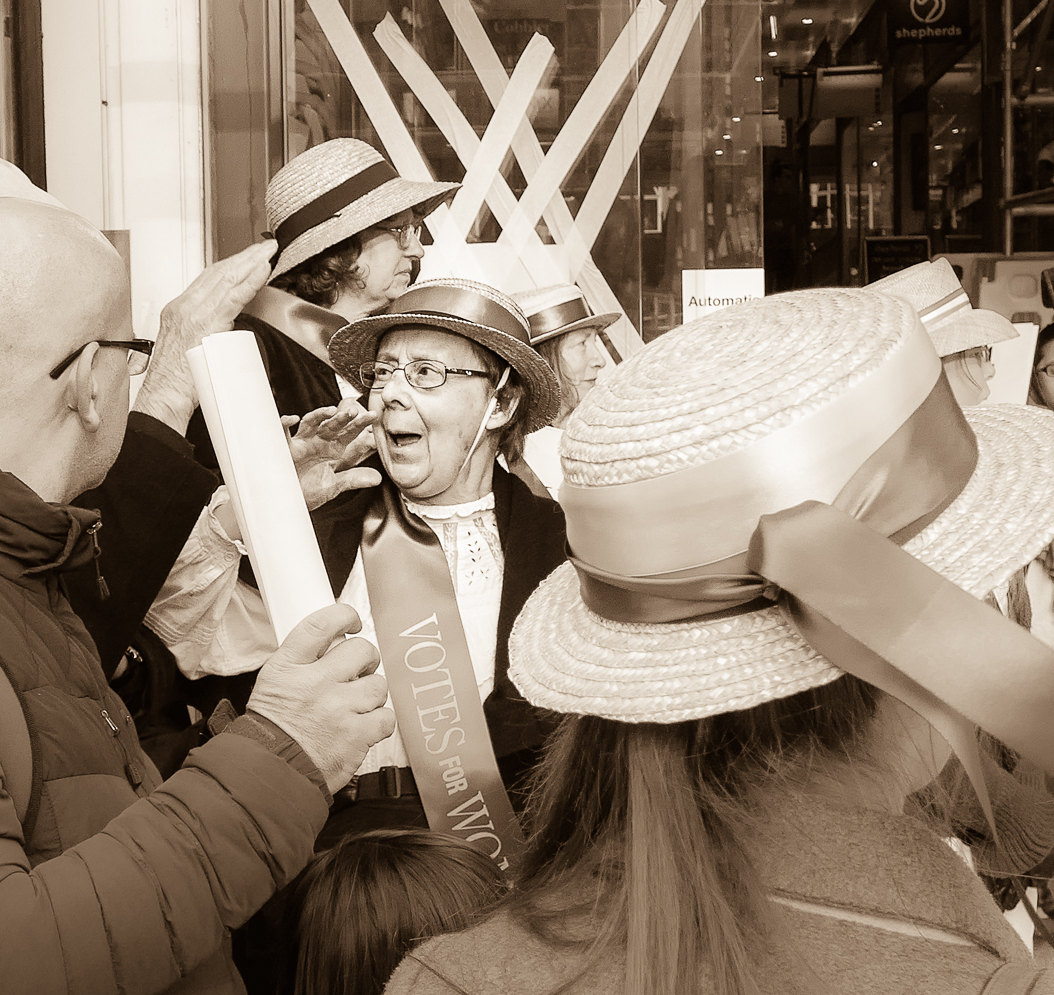
“ Now sisters. Here we are for a nice spot of action. Can I just remind you all that we are targeting Property not People. I suggest is that we go for the Old Grammar School in Kings Norton. Burn it down, I say.”
eleven: John Bright St. Near the WSPU offices ~ March 1918
Here we met Catherine Osler again, and she gave a spirited speech:
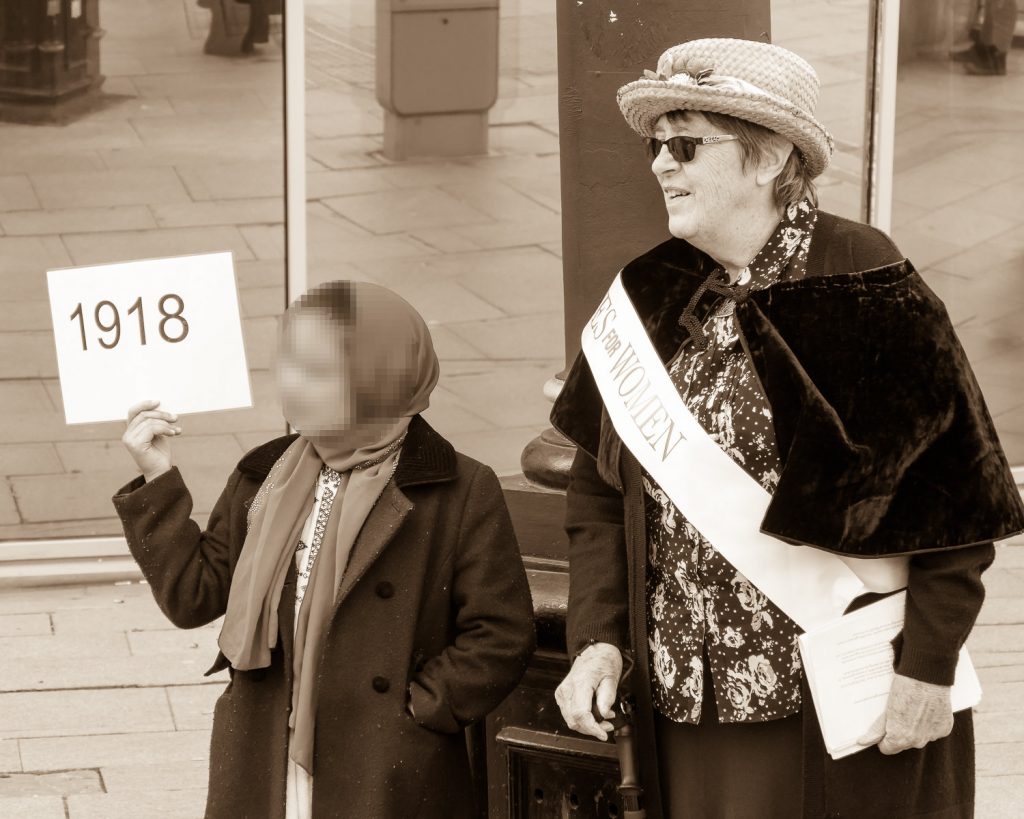
“This is not all that we desired. We aimed for a vote for women on the same terms as men.. Only about 40% of. It leaves unrepresented classes of women who are among the worthiest, most indispensable workers for their country. Some women have endured gross insult, maltreatment, torture, even death itself, in the determination to draw attention to women’s wrongs and some women have been patiently arguing the cause by constitutional means for over 50 years. At last we have at least broken through a barrier and although there is much more to do, we can henceforth go forward Shoulder to shoulder”
Finally we all sang “Shoulder to Shoulder”
“Women young and older
Shoulder put to shoulder
In the might of sacred right
Bolder still and bolder.
Let no ancient custom bind you
Let one bond of suffering bind you
Leave unrighteous laws behind you,
Soon you shall be free!”